














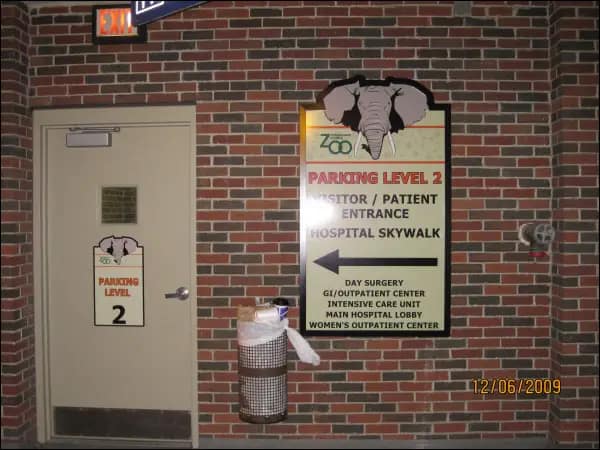























If you’re lost, and can’t find your way, you probably will appreciate it! I went to a large medical facility in the past few years, and I had that experience. There are no clear signs at the entrance. General arrows that pointed towards corridors did not indicate where each department was. Response staff encounter baffled guests who inquire the same rudimentary questions continuously every few steps. The entire experience was annoying, especially regarding how it made me feel about the whole visit even before I got there.
Wayfinding signage prevents that frustration. It is when done properly that visitors will not consciously notice at all. It works seamlessly like that. At Signarama, we carefully consider wayfinding signage for each of our clients. The difference between a space that feels natural and a space that feels confusing is how good the wayfinding signage system is designed and placed.
What Wayfinding Signage Actually Is
Wayfinding signage is a system of coordinated signs that programs and helps the human traffic to navigate through a physical space without getting lost. The concept of wayfinding refers to the mental processes that an individual might undergo when trying to determine their location, destination, and the most efficient route to get there. Signage supports this process by answering questions as they arise in almost the exact place.
One sign on a wall is not a wayfinding system. A wayfinding system is a network of connected signs working together across an entire space. Entry signs that orient visitors when they first walk in. Directional signs that guide movement through corridors and across floors. Identification signs that confirm someone has reached the right place. Informational signs that provide context and detail where it matters.
Each type has a specific job. The whole system only works properly when all the pieces are present, consistent, and positioned where they actually answer the question a visitor has at that specific moment.
The Different Types of Wayfinding Signs
Understanding what each sign type does helps businesses figure out what their specific space is missing.
Identification Signs
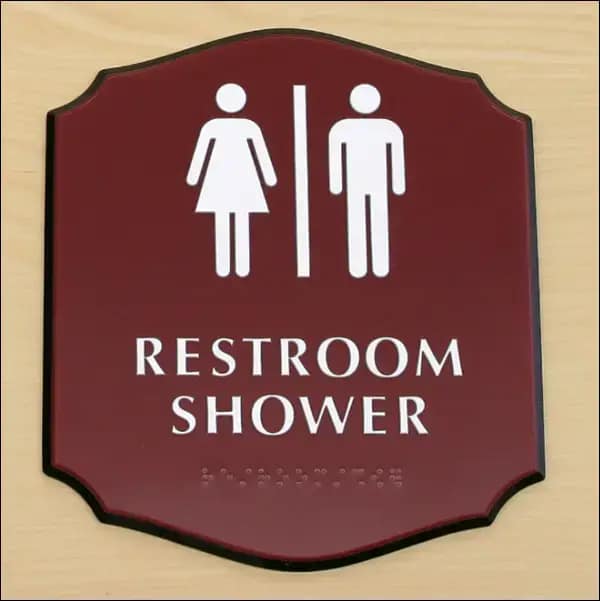
These mark specific locations. Room names, department labels, office numbers, floor designations. Their job is to confirm arrival. A visitor who has been following directional signs toward the accounts department needs an identification sign on the door that confirms this is actually the accounts department.
Directional Signs
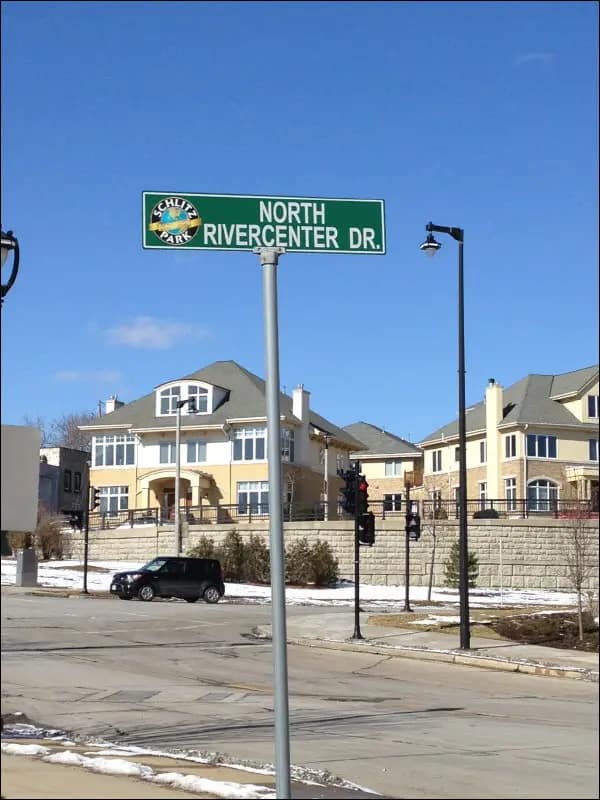
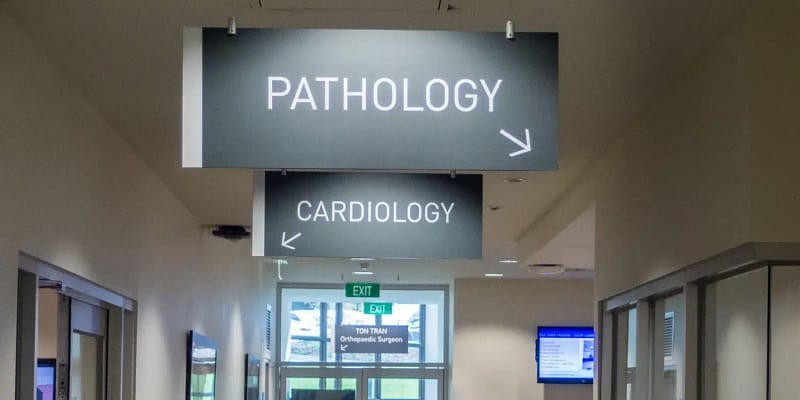
These guide movement. Arrows pointing toward specific destinations, overhead signs at corridor junctions, elevator lobby indicators. They answer the question of which way to go before someone has to stop and ask.
At Signarama, getting directional sign placement right is something we’re genuinely particular about. A directional sign positioned after the decision point it was supposed to influence is useless. It has to be there before the turn, not after the missed corridor junction.
Informational Signs
Directories, facility maps, service listings, operating hours. These give visitors the broader context they need to navigate the space and understand what’s available to them.
Regulatory and Safety Signs
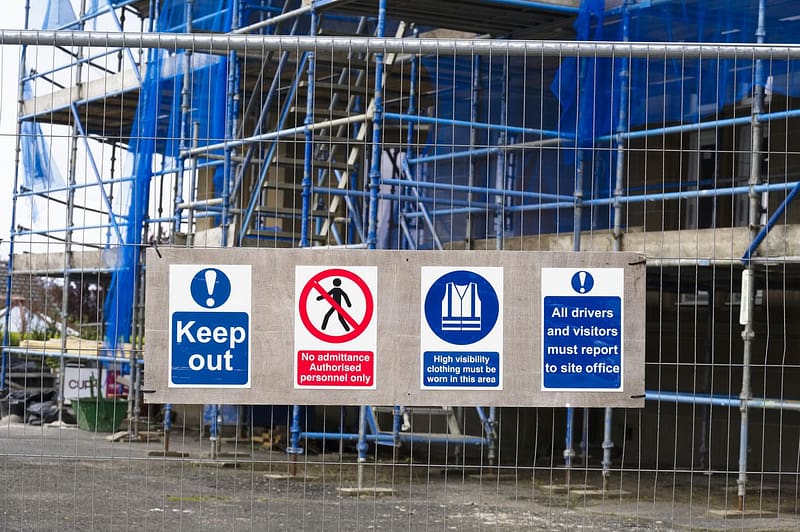
Fire exit signs, emergency evacuation routes, hazard warnings, accessibility information. Some of these are legally required in commercial spaces. They need to be part of the wayfinding system rather than afterthoughts stuck on walls wherever space was available.
Why This Actually Matters for Your Business
The business case for proper wayfinding signage is more practical than most owners initially assume.
Staff time is one of the most obvious impacts. In facilities without adequate wayfinding, employees spend a remarkable amount of time answering the same directional questions over and over again. Every minute spent pointing someone toward the bathroom or the reception desk is a minute that person isn’t doing their actual job. Good wayfinding handles those questions without human involvement.
Customer experience is the other major factor. People who navigate a space confidently feel better about the business than people who feel lost. That emotional state influences purchasing behavior, satisfaction ratings, and whether someone bothers coming back. It seems like a small thing until you realize how many customers are quietly forming negative impressions because they felt confused in your space.
Here is a practical breakdown of how different business types benefit:
| Business Type | Primary Wayfinding Need | Key Benefit |
| Hospitals and clinics | Department and ward navigation | Reduced patient and visitor stress |
| Shopping centers | Store locations and facilities | Longer dwell time, more purchases |
| Office buildings | Meeting rooms and departments | Efficient visitor and staff movement |
| Hotels | Room numbers and facilities | Better guest experience |
| Universities | Buildings and departments | Reduced staff interruption |
| Manufacturing facilities | Safety zones and departments | Compliance and safety |
According to the Sign Research Foundation, businesses with well-designed wayfinding systems report measurably higher customer satisfaction scores and fewer navigation-related complaints than facilities with inadequate directional signage. That improvement shows up in real business metrics not just in how the space looks.
What Separates Good Wayfinding From Bad
A sign that looks professionally made but doesn’t actually help anyone navigate has missed the point entirely. Effectiveness in wayfinding comes from a specific set of design and placement decisions that prioritize function over decoration.
Consistency matters enormously. When every sign in a system uses the same fonts, colors, arrow styles, and mounting heights, visitors learn the visual language of the system quickly and can read any sign in it instantly. Inconsistency destroys that learned recognition and forces visitors to process each sign fresh every time.
Legibility at real viewing distances. Signs need to work from where people actually stand when they need to read them. A beautifully designed sign with text that can’t be read from twenty feet away in a corridor fails at its core function.
Placement at decision points. This is where most poorly planned wayfinding systems fall apart. Signs appear in convenient locations rather than where navigation decisions actually happen. Corridor junctions, elevator lobbies, building entrances. That’s where signs need to be.
Simplicity in messaging. Each sign should carry one clear message. Cramming multiple destinations and directional options onto a single sign creates cognitive overload that slows people down and reduces confidence in the information.
Mistakes That Undermine Wayfinding Investments
Businesses spend money on signs and still end up with navigation problems because of mistakes that are entirely preventable.
Inconsistent design from signs added at different times is extremely common. A new sign added in a different style from the rest of the system immediately weakens the coherence that makes the system work. Every addition needs to match the established visual language.
Using internal naming conventions that visitors don’t understand is another one. The fact that staff know that Department 4B is the customer service team doesn’t help a first-time visitor at all. Signs need to use language that means something to someone who has never been there before.
Failing to update signs when layouts change is perhaps the most damaging mistake. Outdated directional signs don’t just fail to help. They actively mislead people and destroy trust in the whole system. A visitor who follows an arrow and ends up somewhere wrong will stop trusting every arrow in the building.
Signarama audits existing wayfinding systems for businesses that have accumulated inconsistent or outdated signage over time and need a coherent updated system developed properly from the current state of the facility.
FAQs
Q: How much does a wayfinding signage system cost?
A: It depends entirely on facility size, number of signs needed, materials, and design complexity. A proper site assessment gives you accurate numbers for your specific situation rather than a guess.
Q: Can signs be updated when the layout changes?
A: Yes. Many sign types are designed with content updates in mind. Planning for future changes during the initial design reduces what it costs to update things later.
Q: Are there legal requirements for wayfinding signs in commercial spaces?
A: Yes. ADA requirements in the United States specify standards for sign height, tactile elements, contrast, and text size in public commercial spaces. Equivalent standards apply in other countries.
Q: How long does designing and installing a wayfinding system take?
A: Smaller facilities can have a system designed, produced, and installed within a few weeks. Larger or more complex spaces take longer because thorough planning matters more than speed.
Q: Should wayfinding signs match the brand identity?
A: Absolutely. Wayfinding that looks visually disconnected from the overall brand creates a fragmented experience that undermines both navigation effectiveness and brand impression simultaneously.
Q: Is digital wayfinding better than static signs?
A: Each has its place. Digital displays update content easily and work well for interactive directories. Static signs cost less, need no power or connectivity, and work in all conditions. Most well-designed facilities use both depending on location and function.
Conclusion
The signage your visitors come across upon arrival creates the initial impression of your business space. It influences their confidence levels, the time spent by staff on directional questions, the safety of the space, and how professional the business appears to everyone who passes through the door. Companies that think of wayfinding as a real system (not just a series of signs added when a problem becomes clear) consistently generate better experiences and run better than those who don’t.
If your space is experiencing navigational issues or your current signage has become inconsistent and outdated, visit Signarama and consult with a team that takes wayfinding signage seriously. One with the know-how and expertise to design and install systems that actually work for the people who use them every day.
