












































Office Door Signs & Room Nameplates for Milwaukee Teams
Help visitors see whose office they’ve reached, identify the room and check whether it’s in use. Signarama Milwaukee designs custom signs for your doors and work areas, with mounting and replaceable insert options chosen around the space and how your team handles updates.
Give visitors a clear name at the door and your team a manageable way to keep it current.
Which office sign fits the job?
Start with what people need to learn when they reach the room.
What the sign needs to do | Format to consider | Decision to settle |
|---|---|---|
| Display an employee’s name and title | Nameplate with a replaceable insert | Will your staff print updates or order replacement strips? |
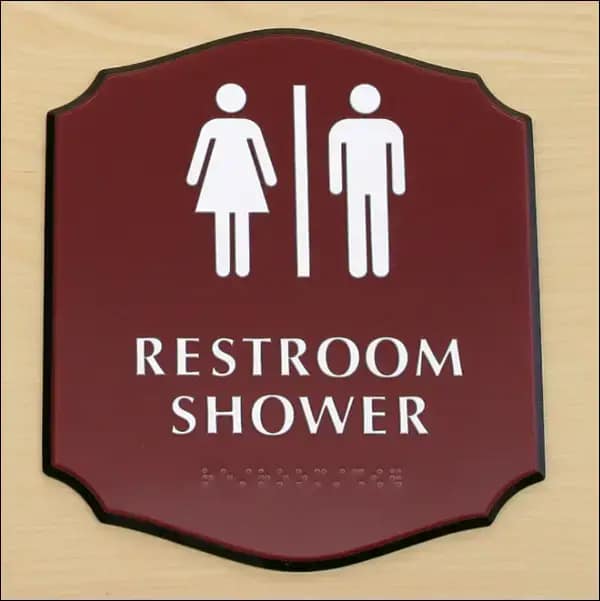
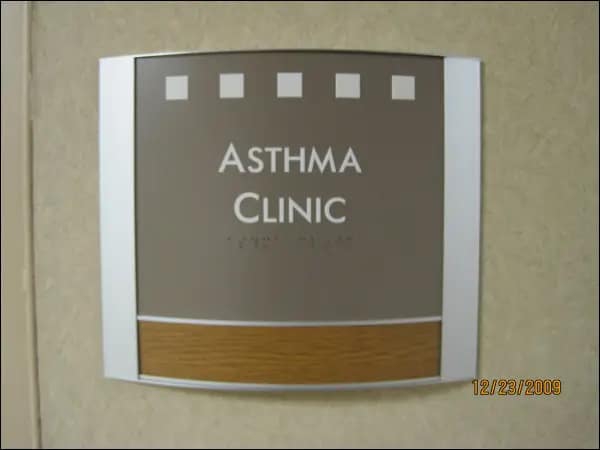
| Identify a room with a lasting name | Printed or engraved room panel | Is the room designation approved, and does it need tactile identification? |
| Show that a meeting is underway | Sliding occupancy sign | Which status messages will people understand immediately? |
| Label an individual workstation | Cubicle nameplate secured with suitable clips or a hanger | How thick is the partition, and what shape is its top rail? |
| Refresh an existing office sign | Replacement insert or complete nameplate | Can the existing holder accept the proposed replacement? |
Our office sign options include modular frames, meeting room sliders and cubicle nameplates. Bring the existing sign or a photograph if you want help narrowing the choices.
Plan how the next name change will work
A changeable nameplate keeps the holder in place while the information inside it is replaced. That can suit offices where employees move between rooms or job titles change.
Decide who will handle updates. A paper-insert system may let your office administrator prepare a new name locally. A replaceable engraved strip involves a different reorder process. The chosen frame determines which insert materials and dimensions it accepts.
Ask about the update method while choosing the sign. Check how the insert is removed, whether a tool is needed and what replacement components are available.
Have the proof show your longest employee name and fullest job title. A layout that works for a short name may crowd the edges when a longer name is added. Agree on line breaks and abbreviations before ordering the full set.
Conference room signs that communicate room status
01
A meeting room slider lets people check whether the space is available before they enter. Signarama Milwaukee offers sliders for conference rooms and other spaces where that information is useful.
02
Choose wording that suits the room, such as “Available” and “In Use.” A manual slider needs someone to move it when the status changes; decide who resets it after a meeting.
03
Keep the fixed room name consistent with your booking calendar. If invitations say “Boardroom” while the door says “Conference B,” visitors have to work out whether they have arrived at the right place.
Choose the finish around the lettering
Office door signs can use acrylic, metal, engraved panels or printed graphics. Bring your logo and a reference for the finish you want to carry through the workplace.
Pick one reference to guide the design. If existing door handles, lobby signs and office furniture use different metal finishes, identify which one the new signs should coordinate with.
Review the room name or employee name at a useful reading size before adding decorative details. For a larger order, ask about a material sample or an initial unit so you can assess the finish under the office lighting.
Glass doors, cubicles and walls need different mounting decisions
Glass doors and partitions
Consider the view from both sides of the glass. Discuss the size and appearance of any backing that will conceal the mounting materials. Include existing frosting or graphics in the photographs so the new sign can be positioned in relation to them.
Signs carrying required tactile room identification also need the applicable placement review.
Cubicle panels
Measure the partition and photograph its top rail. A hanger that fits one panel system may sit poorly on another, even when the fabric looks similar.
Ask which hardware fits the partition and how the sign can be moved during an office reconfiguration. Have the attachment method confirmed before treating it as suitable for the surface.
Painted walls and solid doors
Identify the surface finish and any building restrictions on attachment. Discuss removal at the same time as installation, particularly in leased offices where signs may need to move.
Choose the mounting method for the actual panel, surface and location.
Replacing signs from an older office system?
Start by identifying what you already own. Two holders with the same outside dimensions can have different insert openings or edge details.
For a replacement review, provide:
- A photograph of the entire sign and a closer view of the frame.
- Any manufacturer name or model marking.
- The outside dimensions and, if known, the insert dimensions.
- The wording that needs to change.
- The number of holders or inserts required.
If the original holder is no longer available, ask about the practical alternatives: retaining usable frames, replacing selected signs or adopting a new format for the affected area.
Keep a record of the approved design and the parts ordered. That gives the next person responsible for office signs something more useful than a photograph of the front.
Why order through Signarama Milwaukee?
You can discuss the project with our team at 5061 W. State Street, Milwaukee, WI 53208. Signarama Milwaukee has installed signs across Wisconsin since 2003.
Our services include design, production and installation. You review the artwork before production, so the names, room labels and layout can be checked against your approved list.
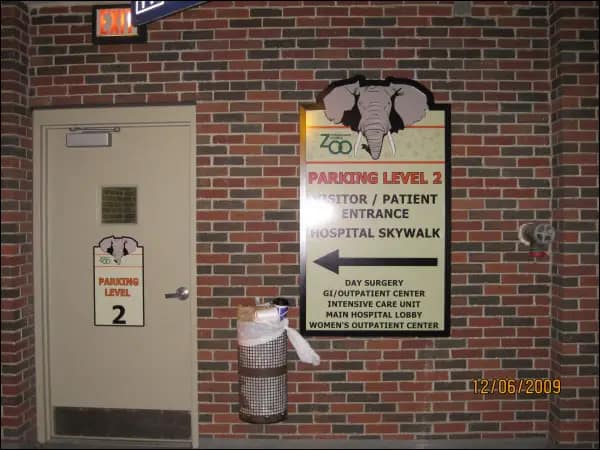
Our Milwaukee project archive includes a WAYFINDING SIGNS collection. Use it as a starting point when discussing the identification signs your workplace needs.
We work with businesses in Milwaukee and Southeastern Wisconsin. Tell us where the signs will be installed and who manages access to the building.
What happens after you request a quote?
The first discussion establishes the sign types, quantities, wording and installation needs. An existing nameplate, a staff list or a marked floor plan can provide the starting information.
Our team prepares artwork for review. Have one person collect corrections and approve the final list. This is especially useful during an office move, when room assignments may still be changing.
Once the design is approved, the signs move into production and installation is coordinated where required. Include your move-in or opening date when you inquire so the schedule can account for the work involved.
For a phased office move, identify which rooms will be ready first and which names remain undecided.
Compare the first order and the cost of later updates
An office sign estimate should make clear what you are purchasing: panels, frames, inserts, mounting hardware and any installation work.
Size, finish, artwork, quantities and attachment requirements affect the scope. Reusing existing frames also requires a compatibility check.
For changeable systems, ask how future name inserts are priced and ordered. For fixed panels, ask what a replacement involves. That lets you compare the initial purchase with the updates your workplace is likely to need.
Confirm whether the quote includes removal of old signs, disposal and any surface repairs. Keep those responsibilities in writing.
Questions about office door and room signs
Can you make new inserts for frames bought elsewhere?
Send the frame details, measurements and photographs so compatibility can be assessed. Matching the outside size alone does not establish that a new insert will fit. A sample of the existing insert can help.
Can our staff print replacement names?
Some systems accept paper inserts that can be prepared in-house. Confirm the selected frame’s requirements and ask about a correctly sized template. Other systems use replacement plates that need to be produced separately.
Do employee nameplates need Braille?
Occupant names are exempt from the sign requirements in §216 of the ADA Standards. Interior signs identifying permanent rooms or spaces, where provided and covered by the standards, have visual and tactile requirements.
A combined sign may contain both kinds of information. Review the room identifier separately from the employee name. Our ADA-compliant signs page covers tactile lettering, Braille and placement in more detail.
Can we add matching signs when the office expands?
Provide the previous order reference, approved artwork and a current photograph. The available materials, frame design and finish need checking before a match is promised. Keeping the original specifications makes that review easier.
How long does an office sign order take?
Timing depends on the selected products, quantities, artwork approval and installation arrangements. Ask for a project-specific schedule once those details are known. Mention any fixed occupancy or move-in date with the initial inquiry.
Get the office signs ready for your next move or update
Send your project address, sign quantities and the names or room labels you want displayed. Add photographs of existing holders or mounting locations, plus your target date.
Tell us which information will change over time. We can discuss formats, artwork and the installation support needed for the order.
