






















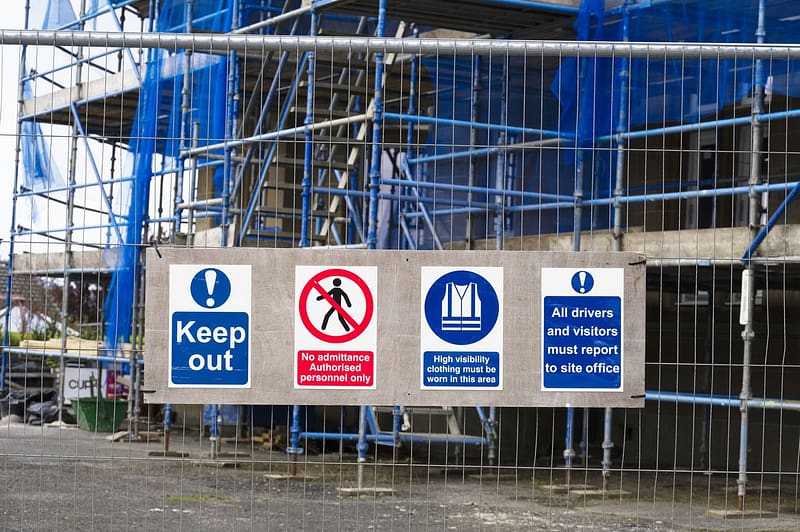






















Regulatory signs communicate traffic laws and rules, including where drivers must stop, which direction they may travel, and where parking is restricted. Familiar examples include stop signs, yield signs, speed limit signs, and no parking signs. Their job is to make the required action clear where it applies. Wisconsin MUTCD: Regulatory Signs.
For a business owner or property manager, choosing regulatory signage involves more than selecting a familiar design. The sign must suit the rule, the location, and the people using the property. A delivery entrance, a customer parking aisle, and an access road can need different approaches.
Signarama Milwaukee, guide explains the main sign types, the standards that matter in Milwaukee, and the decisions to settle before ordering signs for a commercial property.
How to Recognize Regulatory Signs
Many regulatory traffic signs use black lettering or symbols on a white rectangular background. There are important exceptions: STOP uses a red octagon, YIELD uses a downward-pointing triangle with a red border, and DO NOT ENTER uses a red circle with a white horizontal bar on a white square. Shape, color, wording, and symbols work together to communicate the message.
Regulatory vs. Warning Signs
Traffic control signs serve different purposes. Knowing the difference helps you choose a sign that gives the instruction your site actually needs.
| Sign category | Main purpose | Common examples |
| Regulatory | Communicates a rule or restriction | STOP, SPEED LIMIT, NO PARKING |
| Warning | Alerts road users to a condition or hazard | Curve ahead, slippery road |
| Guide | Helps people find a route or destination | Route markers, destination directions |
These categories are defined in MUTCD Section 2A.03.
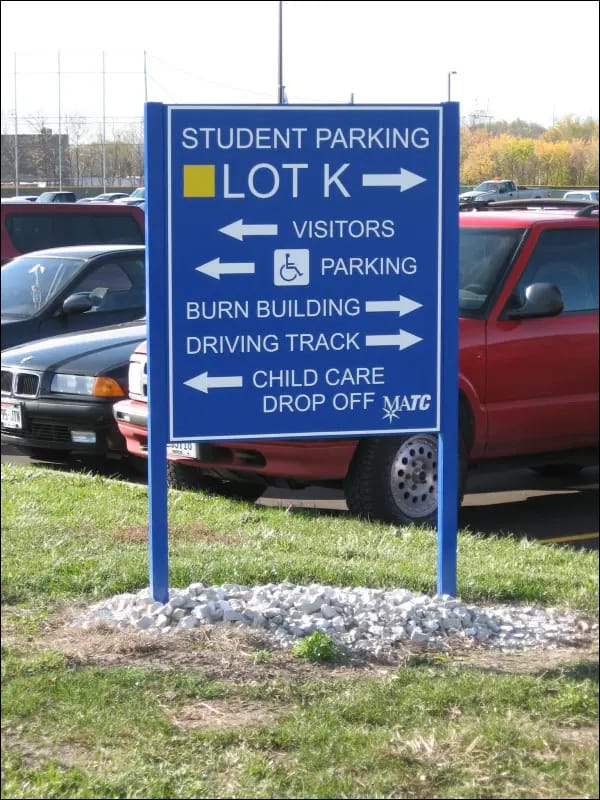
A ONE WAY sign regulates the permitted direction of travel. A sign pointing toward visitor parking helps people find a destination. Both can be useful at the same property, but they answer different questions. Choose the message first, then the correct sign category and design.
Which Regulatory Signs Does a Commercial Property Need?
Start with how people enter, move through, park, and leave. The right mix of regulatory signs for businesses depends on the site layout and the rules that apply. An office building with a shared driveway has different needs from a warehouse receiving large delivery vehicles.
Stop, Yield, and Speed Limit Signs
Stop signs require a complete stop. Yield signs require drivers to give way, stopping when necessary. Speed limit signs communicate the posted limit. These signs address different traffic decisions; selecting one requires understanding the conditions at that location. PennDOT’s regulatory sign explanations.
Adding STOP signs simply to slow drivers is a common planning mistake. The Wisconsin MUTCD states that STOP and YIELD signs must not be used for speed control. If speeding is the problem, have the site reviewed for appropriate speed-management measures.
One Way, Do Not Enter, and Turn Restrictions
One way signs establish the allowed travel direction. Do not enter signs identify a prohibited entrance, while wrong way signs alert drivers traveling against the intended direction. No U-turn, no left turn, no right turn, keep right, and keep left signs address specific vehicle movements. Wisconsin publishes standard designs within its regulatory sign series.
For a commercial site, review these messages as a connected route. A driver who cannot use one driveway still needs a clear, usable way to reach the correct entrance. A restriction that becomes visible only after the turn leaves little opportunity to respond.
Parking, Loading Zones, and Reserved Spaces
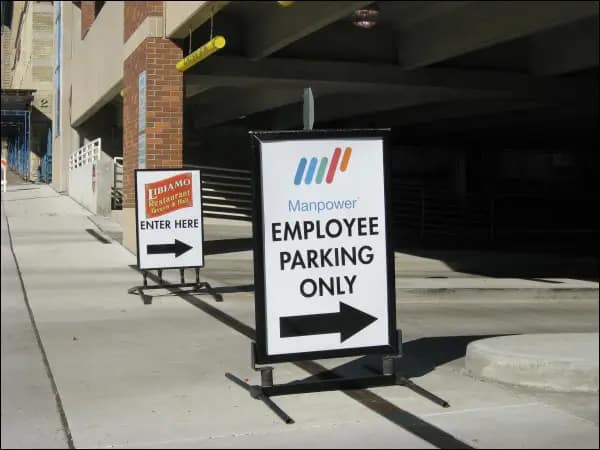
Parking regulatory signs communicate who may use a space, when parking is allowed, or where vehicles must remain clear. Typical needs include no parking signs, loading zone signs, and reserved parking signs for staff, visitors, or tenants.
Write down the operating rule before choosing the wording. Does a loading area serve deliveries all day or only during set hours? Does a restriction apply to one space or a length of curb? Those answers help determine the message, arrows, and sign locations.
If towing is part of the proposed enforcement policy, confirm the applicable Wisconsin and Milwaukee requirements before approving the artwork. Treat the sign wording and the authority to remove a vehicle as separate matters that both need review.
Accessible Parking and Fire Lanes
Accessible parking signs identify designated spaces for eligible users. Fire lane signs communicate restrictions intended to keep emergency access clear. Plan these areas before allocating convenient spaces to employee parking, deliveries, or customer pickup.
For fire lanes, ask the local fire authority to confirm the route, required wording, and sign placement. For accessible spaces, review the sign alongside the parking space, access aisle, and route to the building. A sign cannot correct a blocked or unsuitable access route. U.S. Access Board parking guidance.
Which Rules Apply to Regulatory Signs in Milwaukee?
Traffic sign compliance depends on the location and purpose of the sign. Federal traffic-control standards, Wisconsin requirements, accessibility rules, and local approvals can address different parts of the same project.
The Federal Highway Administration (FHWA), part of the U.S. Department of Transportation (DOT), publishes the Manual on Uniform Traffic Control Devices (MUTCD). As of September 2026, the current federal edition is the 11th Edition with Revision 1, dated December 2025. Wisconsin publishes its own WMUTCD, incorporating state provisions. Use the applicable Wisconsin manual when specifying traffic control devices for a Milwaukee project. FHWA current edition, WisDOT manual.
Private Ownership Does Not Settle MUTCD Applicability
The MUTCD applies to site roadways open to public travel, including qualifying roads within privately owned developments. Parking areas and the driving aisles within them are excluded from its direct scope. A shopping center’s access road and the aisles between parking spaces can therefore have different status. Wisconsin MUTCD, Section 1B.01.
That distinction does not remove separate accessibility, fire-access, or local requirements. Before ordering regulatory signs for parking lots, identify which areas are parking aisles and which function as site roadways. If the boundary is unclear, obtain a location-specific determination from the responsible authority or traffic professional.
Accessible Parking Has Its Own Sign Requirements
Under the Americans with Disabilities Act (ADA) Standards, a required accessible parking identification sign must display the International Symbol of Accessibility. Signs for van spaces must also identify them as van accessible. The bottom of the sign must be at least 60 inches above the ground or finished floor. ADA Standards, Section 502.6.
The Standards include limited identification-sign exceptions, such as sites with four or fewer total parking spaces. State or local requirements still need checking. When requesting products commonly sold as “handicap parking signs,” specify the applicable accessible parking design and installation requirements. ADA Standards, Section 216.5.
Public-street changes require a separate approval path. Milwaukee’s Department of Public Works notes that most traffic signs it installs require Common Council approval, including stop, yield, and parking restriction signs. Bring public-street requests to the City before arranging fabrication or installation. Milwaukee Traffic Signs & Signals.
Custom Regulatory Signs: What Can You Change?
Custom regulatory signs can address property-specific needs, but the freedom to customize depends on the sign’s role. A reserved parking notice may need a tenant name or approved time restriction. A standardized road sign has prescribed design requirements that should guide the artwork.
Keep required shapes, colors, symbols, lettering, and messages intact. Where the MUTCD applies, traffic control devices and their supports must not carry advertising or unrelated messages. A logo or promotional slogan should not be added to a STOP sign. Wisconsin MUTCD, Section 1D.07.
Ask the sign company to distinguish the standard traffic-control elements from the property notices that allow design flexibility. Request an artwork proof showing the exact wording, dimensions, arrows, and any supplementary panels. This makes the approval concrete and helps prevent a branding preference from changing the sign’s meaning.
Plan Regulatory Sign Installation Around Visibility
Regulatory sign installation starts with a view of the site. Drivers need to see the instruction in time to act, and the sign must clearly relate to the place where the rule applies. Wisconsin’s manual requires regulatory signs at or near that location. Wisconsin MUTCD, Chapter 2B.
Inspect each proposed position from the driver’s approach. Consider parked vans, landscaping, delivery vehicles, open gates, and seasonal snow storage. Check pedestrian routes too: a readable sign still creates a problem if its post blocks the space people need to pass.
Nighttime visibility needs specific attention. Where applicable, MUTCD signs must be retroreflective or illuminated, subject to the manual’s exceptions. Retroreflective material returns light toward its source, helping a driver see the sign under headlights. General street lighting does not itself satisfy the sign-illumination requirement. MUTCD, Section 2A.21.
For durable outdoor regulatory signs, discuss the panel material, reflective sheeting, mounting hardware, and exposure conditions together. Ask for the proposed material specifications instead of relying on a broad “DOT-compliant” label. Confirm mounting height and support requirements for each sign; the ADA’s parking-sign minimum is not a universal installation height.
Include inspection and replacement in the plan. Review signs after snow removal, vehicle impacts, landscaping changes, or changes to parking rules. Keep a record of each sign’s location, message, installation date, and material specification so future replacements can be ordered accurately.
A Practical Example: A Retail Site with a Shared Access Road
Consider a hypothetical retail property with a shared access road, customer parking, accessible spaces near the entrance, and a rear delivery area. Drivers sometimes enter through the delivery exit, while pickup customers wait beside the loading doors.
Start by marking the public street, shared access road, parking aisles, pedestrian routes, and emergency access on a site plan. Confirm which rules govern each area. Then separate the two operating problems: drivers need a clearer entrance route, and pickup customers need an appropriate waiting location.
The resulting plan might combine approved entry restrictions, directions to customer parking, and a clearly defined loading-zone message. If one-way circulation is being considered, assess the complete route and obtain the necessary approvals before ordering signs. Review the pickup location without obstructing accessible spaces, access aisles, or emergency access.
This approach produces a useful purchasing brief: each proposed sign has a location, a purpose, and a rule behind it. It also reveals where a layout change or traffic review may be needed before signage can help.
Choosing a Regulatory Sign Company and Comparing Quotes
Choose the purchasing approach around how much of the project is already settled. For a like-for-like replacement with confirmed specifications and a suitable existing post, ordering a standard sign may be sufficient. Check that the old sign and its location were correct before reproducing them.
A local regulatory sign company can be useful when the project needs measurements, artwork coordination, or installation. Ask what the quoted service includes. If the project changes access, traffic priority, or circulation, establish whether a traffic engineer or public authority needs to review it first.
When comparing a regulatory sign manufacturer with a provider offering installation, request the same scope from each. Useful quote details include:
- Sign quantities, dimensions, messages, and applicable standard designs.
- Panel and reflective-sheeting specifications.
- Posts, brackets, foundations, and removal of existing signs.
- Installation locations and responsibility for required approvals.
- Delivery, site work, and any separately priced services.
Cost depends on those details. A panel-only price and an installed-project price cover different work. Ask providers to identify exclusions so you can budget for the complete job.
Before requesting a quote, gather a site plan, approach photos, existing sign dimensions, and a list of current parking or access problems. Include any approved drawings or instructions from the relevant authority. These inputs make it easier to compare proposals and reduce revisions caused by missing information.
Discuss Your Signage Needs with Signarama Milwaukee
Signarama Milwaukee has served local businesses for more than two decades, creating custom signs and graphics. Its parking-sign offering includes accessible parking, no parking, and reserved parking signs, with local installation services. Signarama Milwaukee, parking sign services.
Bring your site photos, required messages, and approved specifications. Contact Signarama Milwaukee to discuss your regulatory signage project.
Frequently Asked Questions About Regulatory Signs
Can a Painted Wheelchair Symbol Replace an Accessible Parking Sign?
No, where an identification sign is required. A pavement symbol does not replace the required above-ground sign. Confirm whether an identification-sign exception applies and whether state or local rules impose additional requirements. U.S. Access Board parking guidance.
How Often Should Regulatory Signs Be Replaced?
Use the sign’s condition, applicable performance requirements, and the manufacturer’s guidance to set an inspection and replacement plan. Look for faded messages, damaged panels, loose supports, or poor nighttime visibility. Also review a sign when the rule or site layout changes; an undamaged sign can still communicate an outdated instruction.
How high should an accessible parking sign be mounted?
Under the ADA’s 2010 Standards, the bottom edge of the sign must be at least 60 inches (five feet) above the ground surface, so a parked vehicle cannot block it. Some states require additional wording, such as the fine amount, so check your local rules.
Who is responsible if my commercial property is missing a required sign?
Generally the property owner or manager. Missing or non-compliant signage — particularly accessible parking signs or unmarked fire lanes — can lead to citations, complaints, or liability exposure, so keeping signage current is the owner’s responsibility.
Can a business make its own regulatory signs?
You can order custom regulatory signs, but they still have to meet the applicable standards for size, color, reflectivity, and wording to be effective and enforceable. Custom wording is fine; ignoring the design standards is not.