










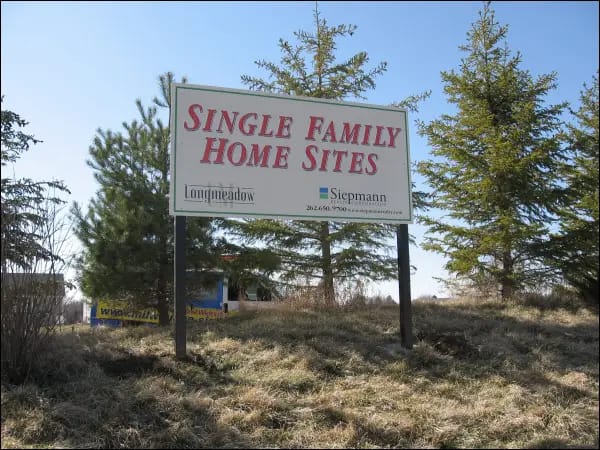
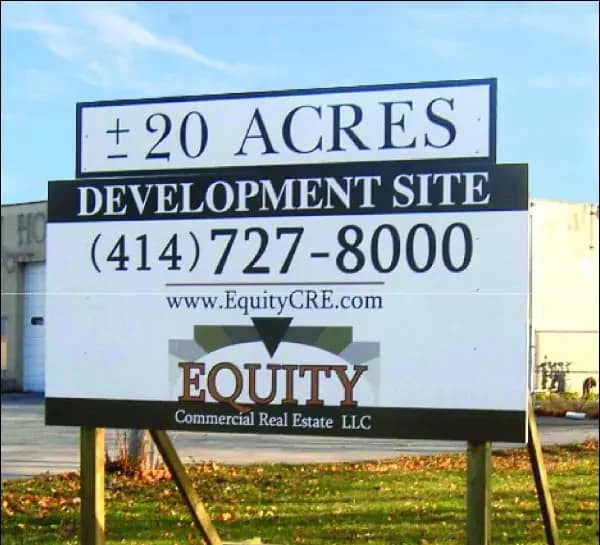
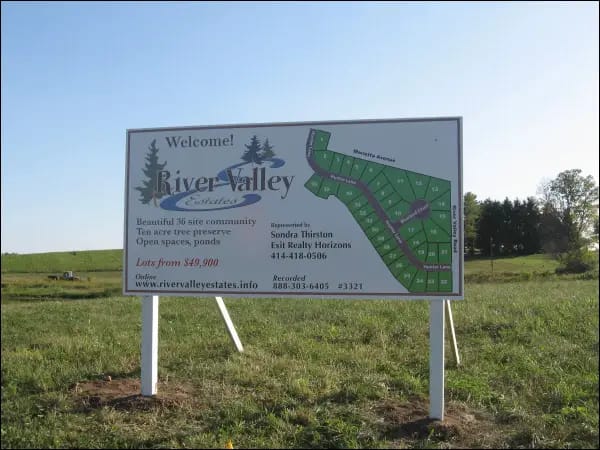





































Walk past any active building site and the first thing you notice – before the machinery, before the workers, before anything else – is the signs. Construction site signs are not decoration. They are legal requirements, safety tools, and brand statements all rolled into one.
Get them wrong and you risk fines, accidents, and a damaged reputation. Get them right and your site runs safer, looks more professional, and stays on the right side of the law. This guide covers everything that matters – safety, branding, compliance, and how to choose the right signs for your site.
Why Construction Site Signs Matter More Than People Think
A lot of site managers treat signage as an afterthought. Something to sort out quickly before inspectors show up. That’s the wrong approach.
Construction site signs do several important jobs at the same time:
- They warn people about real dangers
- They control who goes where on site
- They meet legal obligations
- They show the public who is building what
- They protect the company if something goes wrong
That last point matters more than most people realise. If there’s an accident on site and the right warning signs weren’t in place, liability shifts significantly toward the contractor. Proper signage is part of your legal defence as much as it is a safety tool.
Signarama works with construction companies across the country to get site signage right – from the first hoarding boards to the final safety notices inside the building.
Types of Construction Site Signs
Not all site signs serve the same purpose. Here’s a breakdown of the main categories and what they do:
Safety Warning Signs
These are the most critical. They warn people – workers and public alike – about specific hazards.
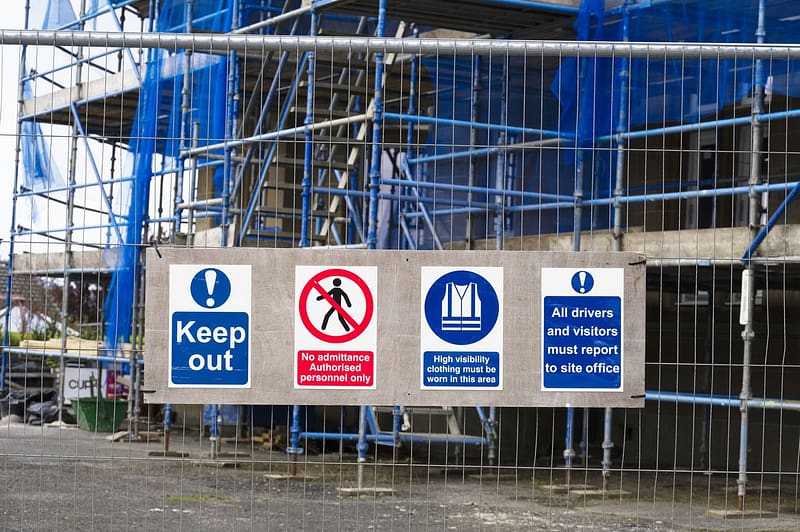
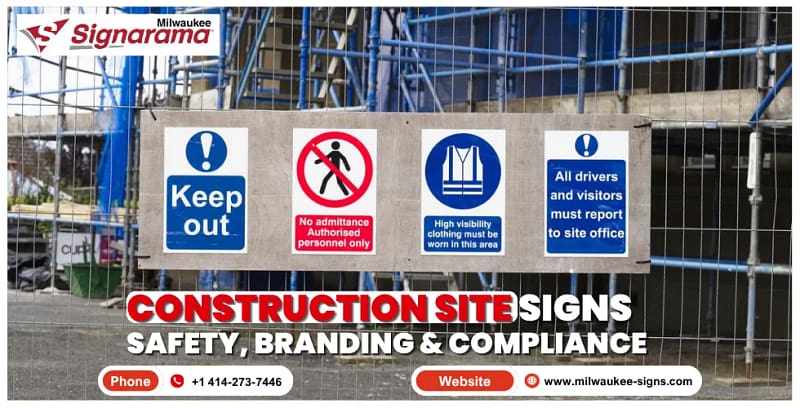
Danger signs warn about immediate threats. High voltage. Falling objects. Excavation edges. These use red and white colouring as standard.
Warning signs flag hazards that need caution but aren’t immediately life-threatening. Uneven surfaces, limited headroom, wet floors. These typically use orange or yellow.
Caution signs highlight potential minor hazards. Slippery when wet, watch your step, low clearance ahead.
Mandatory Instruction Signs
These tell people what they must do in a specific area.
Hard hat required. A high- visibility vest must be worn. Safety boots beyond this point. Hearing protection in use. These signs are non-negotiable on most sites and are usually blue and white.
Prohibition Signs
These tell people what they cannot do.
No unauthorized entry. No smoking. No mobile phones in this area. No pedestrians beyond this point. These use red circles and are immediately recognisable.
Hoarding and Branding Signs
Large printed boards that wrap around the site perimeter. They serve two purposes – security and brand visibility.
A well-designed hoarding board keeps the public out and makes the site look professional. It also tells the neighbourhood – and anyone driving past – exactly who is responsible for the build.
Informational Signs
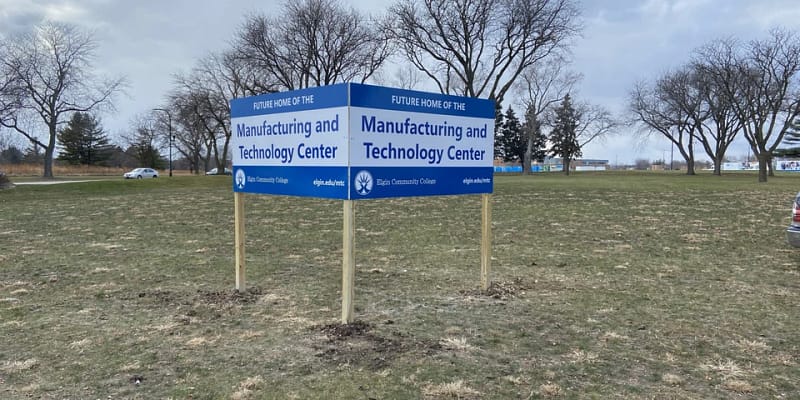
Site address boards, project name boards, planning notice boards, emergency contact information, and welfare facility locations. These help everyone on site find what they need and stay informed.
Construction Site Signs and Legal Compliance
This is where many sites fall short. Signage isn’t optional. There are specific legal requirements that apply to almost every construction site.
| Sign Type | Legal Requirement | Governing Standard |
| Safety warning signs | Mandatory on all sites | Health & Safety (Safety Signs) Regulations |
| PPE requirement signs | Required where PPE is mandatory | PPE at Work Regulations |
| Hazardous substance warnings | Required near COSHH materials | COSHH Regulations |
| Fire exit and safety signs | Required in all occupied areas | Fire Safety Order |
| Planning notice boards | Required by planning permission | Local Planning Authority rules |
| Traffic management signs | Required where vehicles operate | CDM Regulations |
Missing any of these can result in improvement notices, fines, or site shutdowns from the Health and Safety Executive. It’s not worth the risk.
The Health and Safety Executive publishes detailed guidance on construction site safety sign requirements – essential reading for any site manager or contractor responsible for compliance.
Branding on Construction Sites
Construction site signs are also one of the most underused marketing tools in the industry.
Think about it. A large hoarding board on a busy road gets seen by thousands of people every single day – for months or years while the build runs. That’s significant brand exposure. And most construction companies either skip it entirely or put up something basic that doesn’t do the job properly.
Here’s what strong site branding looks like:
Consistent colours and logos. Your company colours and logo should appear clearly on hoarding boards, site entrance signs, and project information boards. It should be immediately obvious who is running the site.
Project information. Many people walking past a site want to know what’s being built and when it will be finished. A clean project board answers those questions and builds goodwill with the local community.
Contact details. Put a phone number or website on your hoarding. People who like what they see might want to talk to you about their own project.
Quality printing. Faded, peeling, or poorly printed signs make a contractor look amateur. High quality large format printing holds up to weather and looks professional for the full duration of the project.
Signarama produces full hoarding boards, project branding signs, and site entrance displays that look sharp from day one to project completion.
Materials for Construction Site Signs
The right material depends on where the sign is going and how long it needs to last.
Correx (Fluted Polypropylene)
Lightweight and affordable. Great for short-term signs and notices. Not suitable for long-term outdoor use in harsh conditions.
Dibond (Aluminium Composite)
Rigid, weather-resistant, and long-lasting. The go-to material for permanent site signs, entrance boards, and professional-looking safety signs. Holds up well in all weather.
PVC Foam Board
Lighter than Dibond but still rigid. Good for indoor site signs, welfare areas, and notices that need a clean professional finish without heavy weight.
Mesh Banners
Used on scaffolding and hoarding where wind resistance matters. The mesh structure lets air through – reducing the load on fixings and preventing signs from acting like sails in strong wind.
Reflective Materials
For signs near roads or areas where visibility at night is important. Retro-reflective sheeting makes signs visible in vehicle headlights even in complete darkness.
Common Mistakes on Construction Site Signage
These come up again and again. Avoiding them saves money, time, and potential legal problems.
Not enough signs. One danger sign at the site entrance isn’t sufficient. Signs need to be at the point of hazard – not just at the gate.
Signs placed too high or too low. Eye level is where signs get read. Too high and people ignore them. Too low and they get obscured by equipment or materials.
Faded or damaged signs left in place. A sign that can’t be read is worse than no sign. It gives the impression that safety is being managed when it isn’t. Replace damaged signs immediately.
Generic signs for specific hazards. A general warning sign doesn’t communicate a specific risk clearly. If there’s a specific hazard – a particular chemical, a specific drop height, a specific voltage – the sign needs to say exactly that.
No multilingual signs on diverse sites. If your workforce speaks multiple languages, critical safety signs should reflect that. A warning sign nobody can read doesn’t protect anyone.
Hoarding boards with no branding. Plain hoardings are a missed opportunity. Every site is a marketing opportunity for the contractor running it.
How to Plan Your Site Signage Properly
Good site signage doesn’t happen by accident. It needs a plan.
Start with a site survey. Walk the site before work begins. Identify every hazard, every access point, every area where the public might be at risk. Map out where signs need to go.
List every legal requirement. Work through the relevant regulations for your site type and make sure every mandatory sign is accounted for.
Plan your hoarding and branding. Decide early what the perimeter looks like. Order hoarding boards before the site starts – not after the frame goes up.
Order quality materials. Don’t cut corners on sign quality. A sign that fades in three months on a two-year project will need replacing and still creates gaps in safety coverage.
Review regularly. Sites change. New hazards appear. Old ones are resolved. Sign placement needs to be reviewed regularly – not just set up once and forgotten.
FAQs About Construction Site Signs
Are construction site signs a legal requirement?
Yes. Multiple regulations require specific signs on construction sites. Missing mandatory signs can result in fines and enforcement action.
What size should construction warning signs be?
Size depends on viewing distance. The further away the sign needs to be read, the larger it needs to be. A specialist sign supplier can advise on correct sizing.
Do hoarding boards need planning permission?
In some cases yes – particularly for large or illuminated hoardings. Check with your local planning authority before installation.
What’s the best material for scaffolding signs?
Mesh banners. They allow wind to pass through, reducing load on fixings and preventing damage in bad weather.
How often should site signs be inspected?
At minimum monthly – and after any significant weather event or site change that might affect sign placement or condition.
Conclusion
Construction site signs are not a box-ticking exercise. They protect workers. They protect the public. They keep you on the right side of the law. And when done properly, they tell the world exactly who is doing the work and that they take quality seriously. Every site – big or small – needs a proper signage plan before the first day of work begins. Get the safety signs right. Meet every compliance requirement. Use your hoarding boards as the marketing tool they actually are.
And don’t cut corners on materials or quality. The cost of doing it properly is small compared to the cost of getting it wrong. Whether you’re starting a new project or reviewing an existing site, make construction site signs a priority from day one – your workers, your clients, and your reputation will all be better for it.